
Chapter I · The descent
Everything you see from orbit, you can reach.
Elsewhere, a planet is a backdrop until a loading screen trades it for a level. Here it is one body, 6,378 km in radius like the Earth, and you fly down into it: through the clouds, along the ridges, to the treetops. A seamless planetary landing, in one take.
Planet radius
Highest orbit flown
Lowest pass
Loading screens
Chapter II · Landfall
Set down anywhere. Step outside.
The ship lands where you point it, on a snow ridge above a hazy valley or a beach at dusk. Then the hatch opens and you walk: your own steps in the snow, the wind, the ship waiting behind you.
Chapter III · The world
No one has seen these mountains. Not even us.
The planet is procedurally generated end to end: tectonic plates that raise ranges and volcanoes, seas and shores, snow and forest that follow the climate. Every horizon is unexplored, including by the people who wrote it.
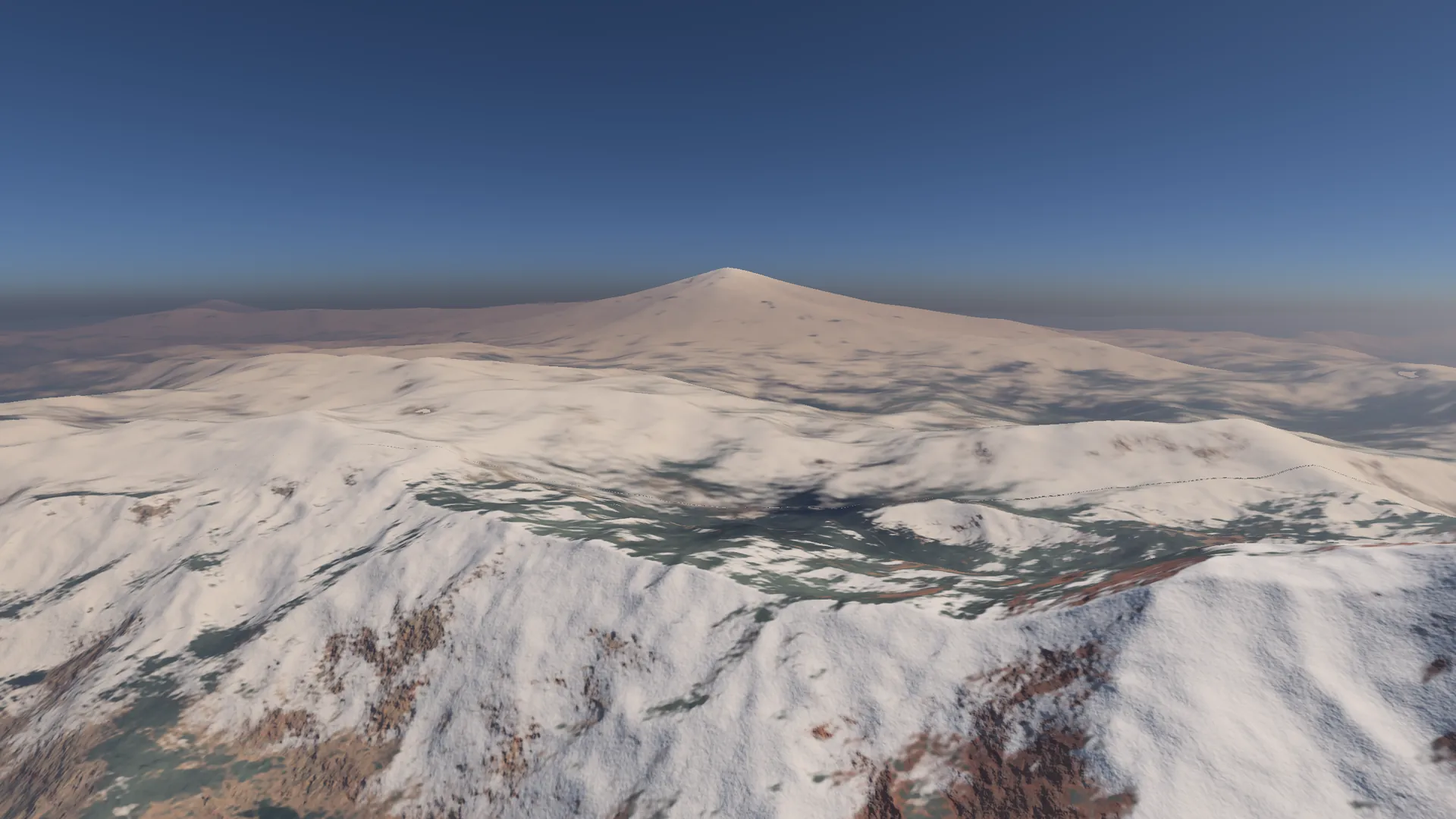
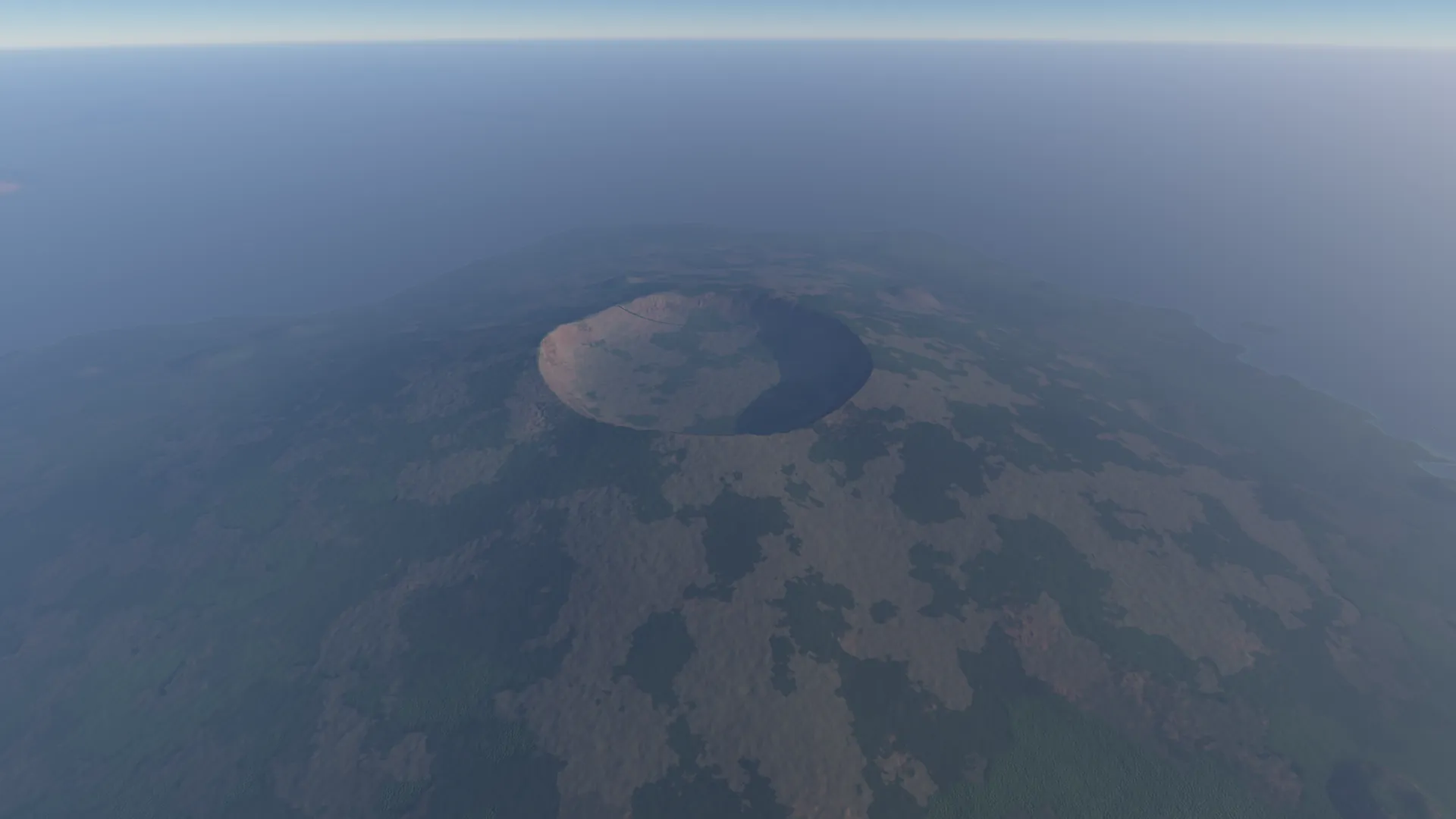
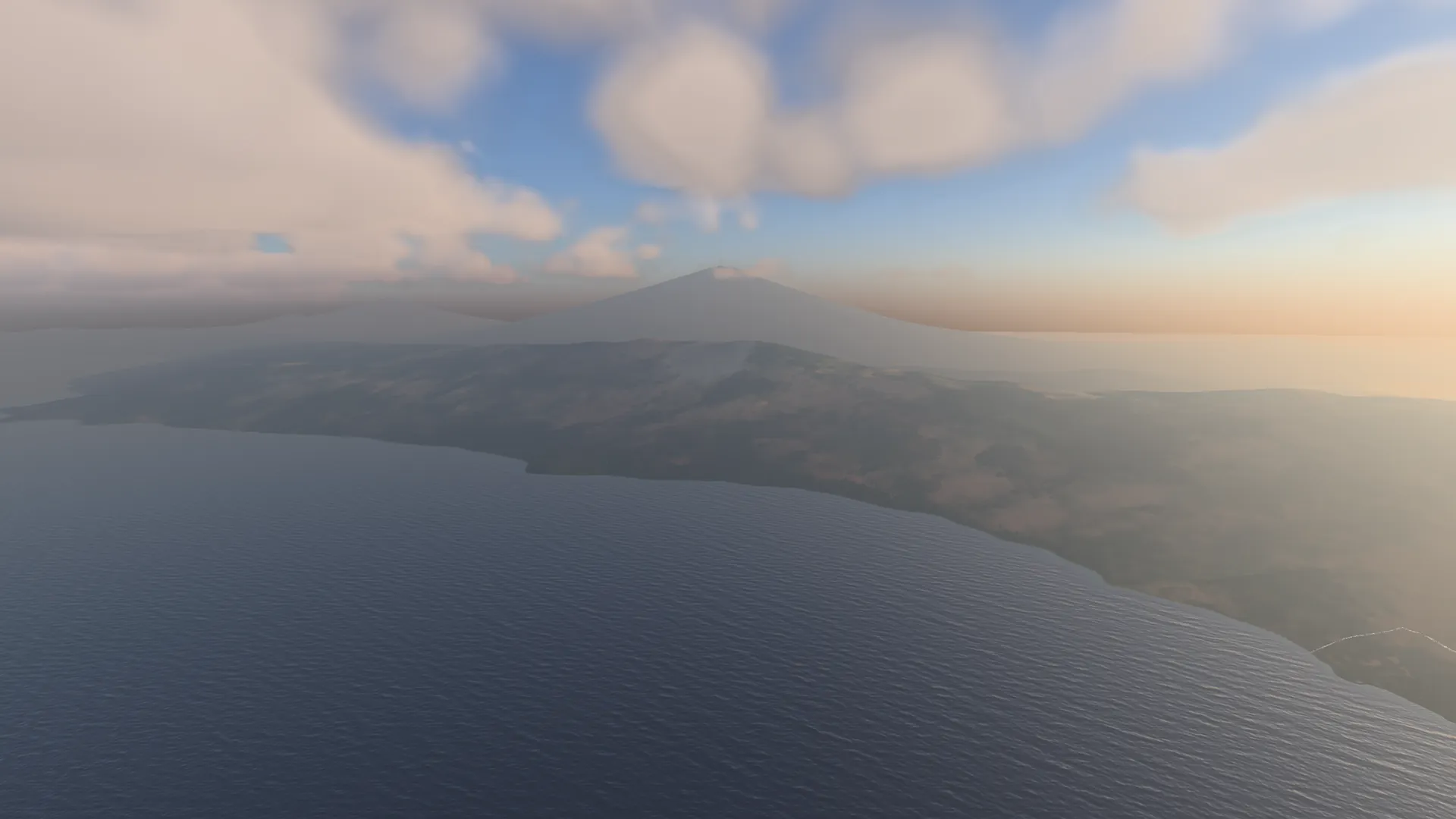
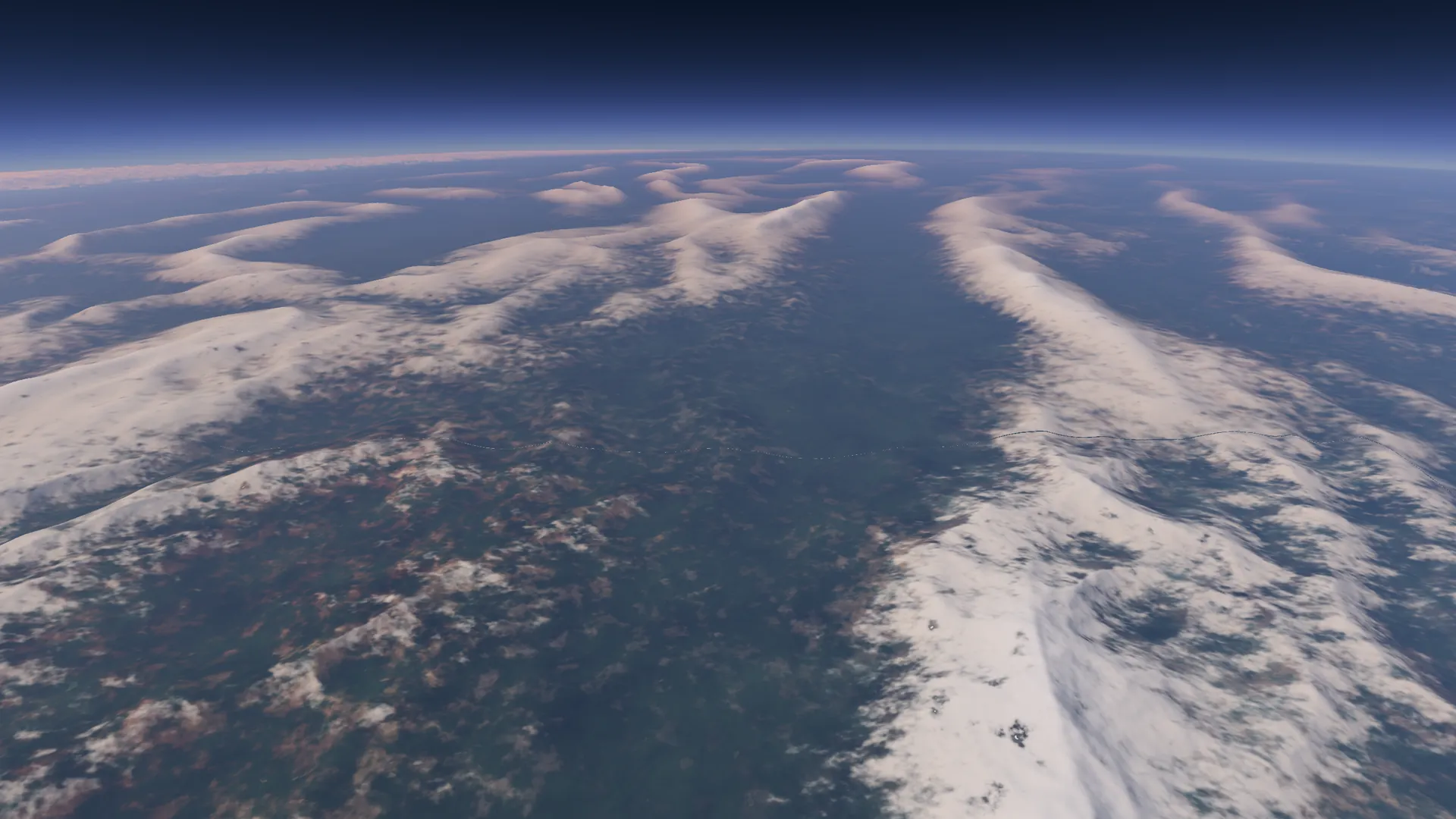
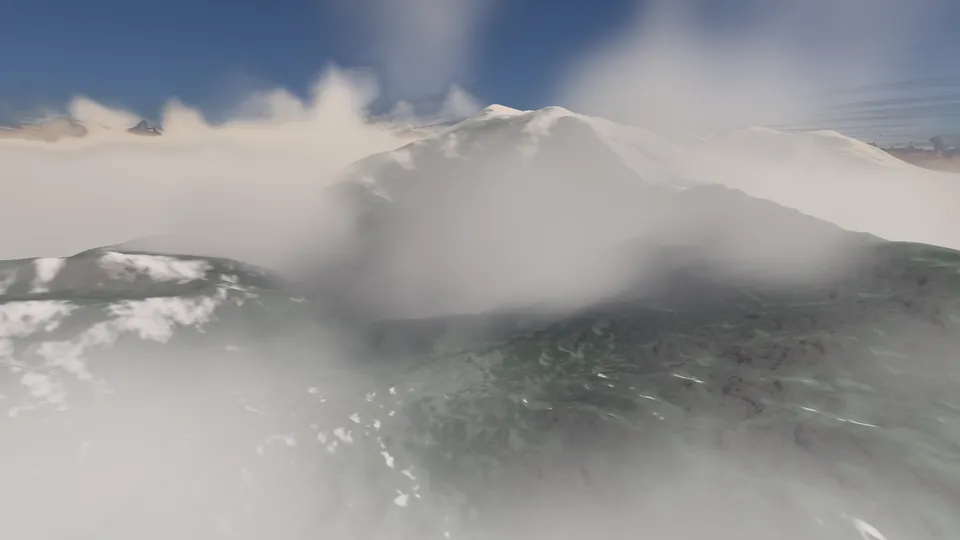

Clouds from 2 to 13 km
The sky is a layer, not a ceiling.
Chapter IV · The expedition
We have a world. Now we need a crew.
Exolune's source is public. What turns a flight into a game is still ahead: a star system to cross, reasons to leave orbit. Every waypoint is open.
Waypoint 1 · Reached
Flight
An Earth-sized world, flown from orbit to the ground in real time.
Waypoint 2 · Reached
Landfall
Set down anywhere, and step outside.
Waypoint 3 · Next
The system
Moons, sister worlds, and the long dark between them.
Waypoint 4 · Ahead
The game
Missions, discoveries, a reason for every departure.
- Open positions
- Gameplay
- Graphics & shaders
- Technical art
- Audio
- Game design
Chapter V · Under the hull
Every frame, the whole planet.
- Stack
- C++ and DirectX 12, on Windows
- Terrain
- Plates, ranges, rifts and volcanoes from a tectonic map, rebuilt on the GPU every frame
- Atmosphere
- After Hillaire 2020: aerial perspective, ground haze, sun shafts
- Ocean
- Four FFT cascades, persistent foam, glint from orbit
- Clouds
- Volumetric, 2 to 13 km, drawn from the planet's climate
- Life
- Trees and shrubs placed by climate, over the whole planet
- On foot
- Walking on the rendered ground, steps and wind that follow the terrain
- Cinema
- A cinematic mode that renders any route frame by frame and encodes it on the GPU
- License
- PolyForm Shield 1.0.0, source available
Questions
Before you take off.
Is the planetary landing really seamless?
Yes. The planet is one body, rendered every frame from orbit to the ground. There is no loading screen, no level swap and no cut: the trailer is a single flight rendered in the engine.
How does it compare to Star Citizen, Elite Dangerous, No Man's Sky or Starfield?
Those are large, long-running games with far more to do. Exolune is young and small. What it brings is an Earth-sized planet generated from plate tectonics and climate, flown from orbit to the treetops in one continuous flight, with its source public.
Is it like SpaceEngine or Outerra?
It shares their love of scale. SpaceEngine explores a universe and Outerra renders the Earth; Exolune is a game engine with its own generated planets, a ship to fly, landing and walking, and a game being built on top.
Can I play Exolune?
Not as a finished game yet. You can build it from source on Windows today, fly the ship from orbit, land anywhere and walk on the ground.
Is Exolune open source?
Its source is public on GitHub under the PolyForm Shield 1.0.0 license. That makes it source available rather than open source: you can read, build, change and use it, but not to compete with the project.
What hardware does it need?
Windows 10 or 11 and a DirectX 12 GPU with double precision.
Can I make my own videos of the game?
Yes. The engine has a cinematic mode: give it a route of camera and ship poses and it renders every frame, then encodes the film on the GPU.

See you in orbit.
Windows 10 or 11 · DirectX 12 GPU with double precision